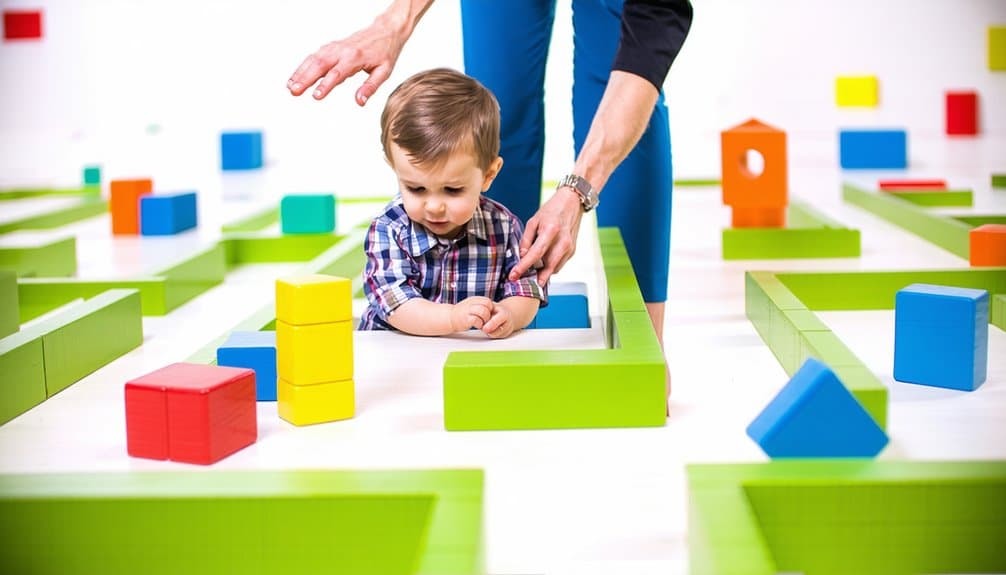
Spatial Reasoning: The Proven, Trainable Foundation Behind STEM Achievement and Innovation.
Visuospatial skills are the ability to comprehend, analyze, and recall the visual and spatial relations among objects or space.
They relate to one’s ability to imagine, manipulate, and rotate objects in the mind’s eye. They help students across STEM disciplines, whether they’re visualizing problems in math or force diagrams in physics, imagining molecules in 3D space, or designing complex mechanisms.
Spatial skills are vital to performance in many STEM subdivisions, particularly those with the worst gender gaps (e.g., physics, engineering, computer science).

Students' spatial skills predict:
Future mathematics success

Who pursues STEM careers

Who drives STEM creativity and innovation
They are also essential life skills, as they are linked with wayfinding, navigation, and map reading. They are also linked with art (perspective drawing), construction, sports, design, creative problem solving, and may even be used to diagnose Alzheimer’s (patients often lose their spatial reasoning abilities years to decades before other symptoms onset).
Unfortunately, spatial reasoning is a critically overlooked aspect of STEM education. This lack of formal spatial education leads many students to fall behind in this skill, putting their STEM grades and future opportunities at risk. Conversely, the lack spatial thinking in the school curricula also disadvantages students with exceptional spatial ability, whose skill go unrecognized.